Meet Elena, an AI coach for couples
Having the same fight again?Elena guides you through it.
Regular or on-demand voice sessions with Elena, an AI relationship coach trained on the scientific methods couples therapists use. She’ll hear your side first — and both sides, when your partner’s ready. The intro session is free: one problem, about fifteen minutes, on your own.
Free · no account, no card
Your private sessions stay private. How confidentiality works →
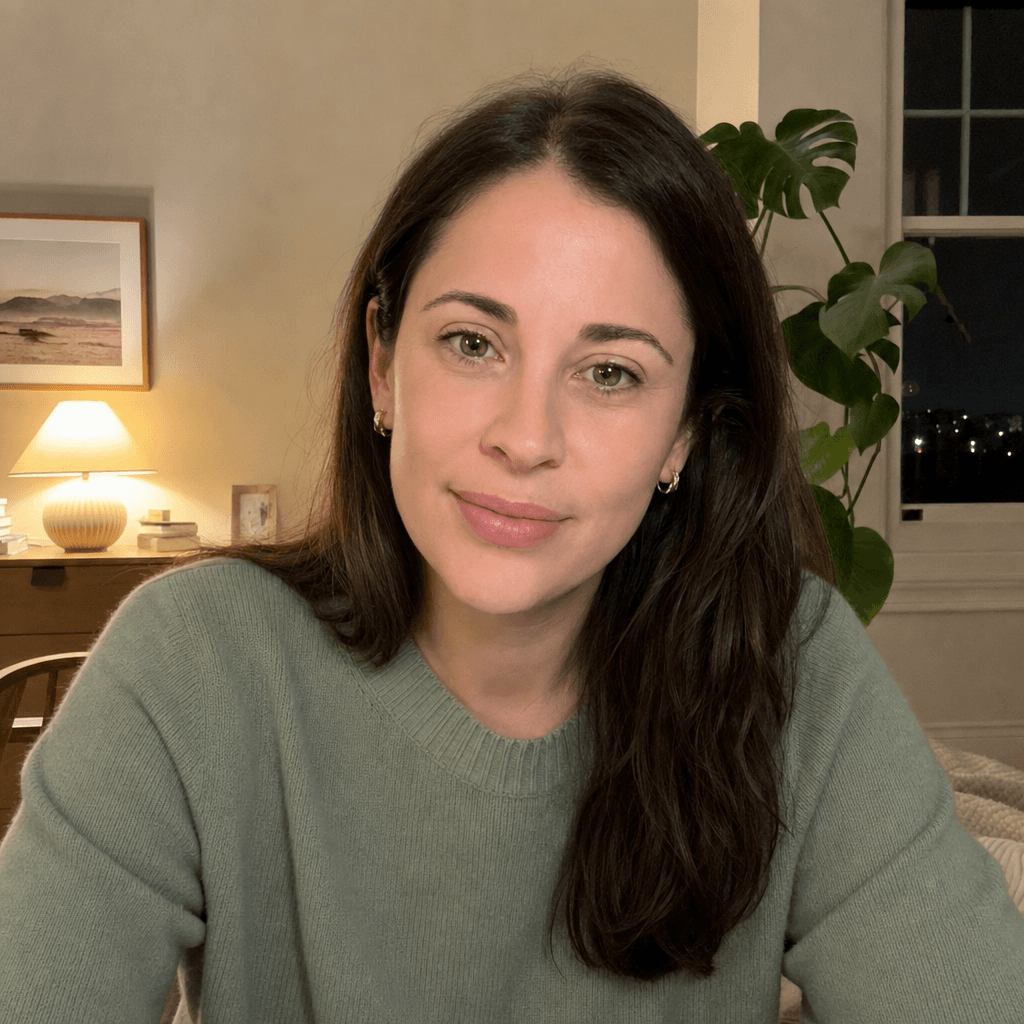
Elena · your coach
“I’m Elena. I’m an AI coach for couples. What you tell me on your own stays with me, and I don’t take sides.”
Bringing your partner in
She helps you invite your partner.
You start on your own, with the third chair empty. When you’re ready, Elena writes the invitation with you — in your words, not a company’s — and your partner gets their own private start.
Sam

Elena · coach

Jordan
Your intro session
About fifteen minutes with her, on your own, tonight. No account and no card.
She helps you invite your partner
You pick the tone, she drafts the message, you change any word. Your partner gets their own private start with her first.
Your first session together
The three of you in one room, free, and nothing held back for later.
Bringing your partner in
She helps you invite your partner.
You start on your own, with the third chair empty. When you’re ready, Elena writes the invitation with you — in your words, not a company’s — and your partner gets their own private start.
Sam
Elena · coach
Jordan
One of you, first
Then your partner
Then the three of you
Your intro session
About fifteen minutes with her, on your own, tonight. No account and no card.
She helps you invite your partner
You pick the tone, she drafts the message, you change any word. Your partner gets their own private start with her first.
Your first session together
The three of you in one room, free, and nothing held back for later.
Your intro session
A session is a video call with your coach.
The intro one is free and takes about fifteen minutes: you, on your own, with the one problem that keeps coming back. Her notes sit open beside the call, and once your partner joins you both read the same page.

ElenaSpeaking
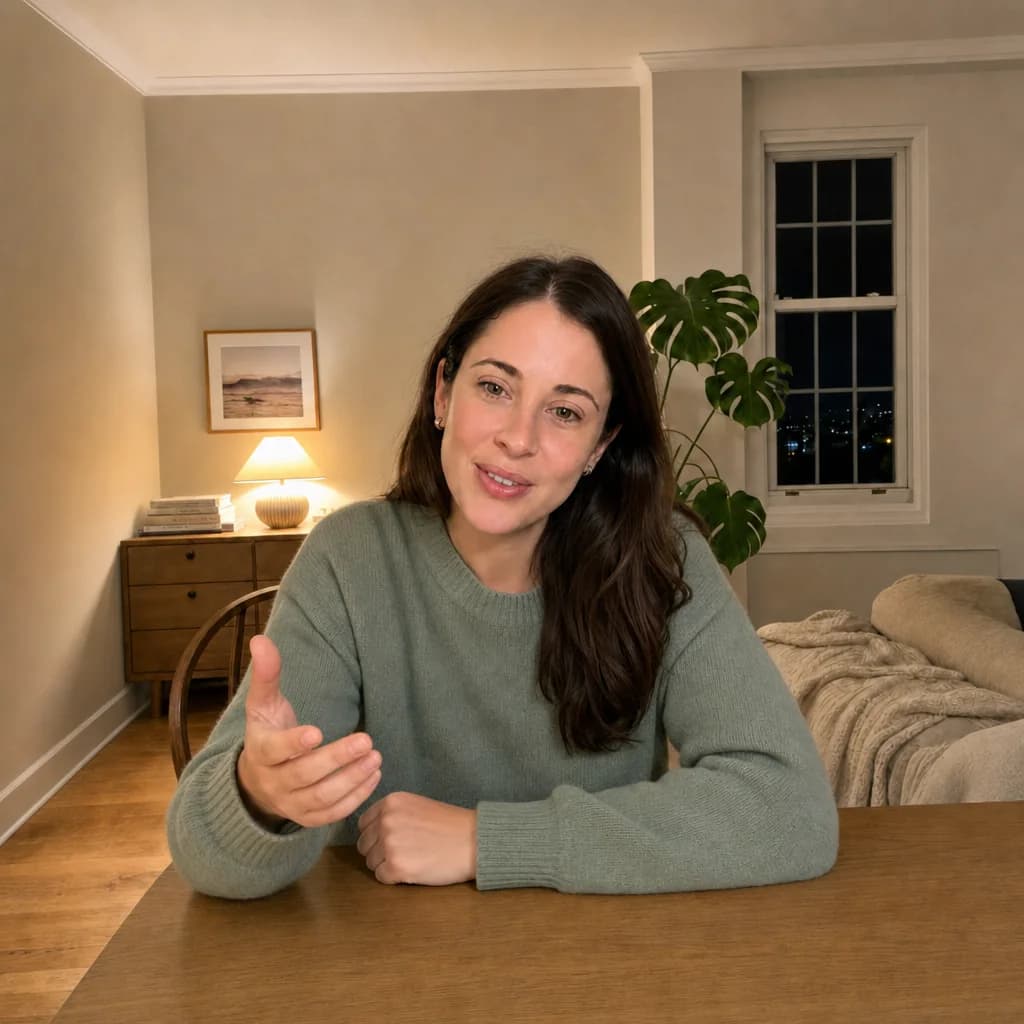

No app. It works in your browser, tonight — on a phone or a laptop.
First I work out what this is
Three short screens, and whatever you want to tell me in your own words. Then I name what I think is actually going on between you — and you get to tell me I have it wrong.
Then I say which session I’d run
I’ll name the session I’d run for you tonight, built for the thing you’re carrying rather than a course everyone gets.
I run it with you, live
I speak first, so you don’t have to know how to start. I interrupt carefully, and I never pick a winner.
You leave with something to do
I say back what I heard, give you one move to try this week, and write the line you can send your partner.
How the work works
Not a chat window
She names the session, then runs it
Elena does not wait to be prompted. She listens to what is actually going wrong between you, names one short session for it, and asks whether you want to try it — and then she runs that session, beat by beat, and keeps time so you do not have to.
- Seven short sessions, each written for a different way couples get stuck
- One at a time, fifteen to twenty minutes, with a clear thing to try afterwards
- She asks before she starts anything — you can always say not that one
Meet Elena
“Why should you trust me?”
It’s a fair question to put to a machine, and it’s the one Elena asks herself in the first minute of a first session. Here is her answer, in her own words — and every part of it is something you can go and check.
“”
how a check-in opens, four weeks in
Everything I say traces back to a paper.
38 published studies sit behind the way I work, and every one of them is linked on this site. If I tell you something about couples, you can go and read where it came from. I don’t invent findings, and I don’t quote numbers nobody can check.
Read the research →Your voice is never recorded.
A session is live audio, so there is no recording of it to replay — none is ever made. What is kept is the written record of what we each said, and the person who builds me reads those records to check my coaching and make it better. They are never shown to your partner, never sold, and never used to train AI models.
What we keep, in full →I’m a coach, not a therapist.
I’m not licensed, I can’t treat a mental-health condition, and I’m not a replacement for therapy or medical care. If what you’re carrying needs a person, I’ll say so plainly and point you to human help. What I’m good at is the pattern the two of you keep falling into.
Where the line is →Nothing I do is improvised.
I work from three families of practice, and I’ll tell you which one I’m using and why:
- Emotion-focused couples work — for the fights that are really about distance
- Behavioral couples methods — for the patterns you can change by next week
- Structured repair conversations — for the morning after the bad night
I hear the pauses, not just the words.
We talk out loud, which is the point. I hear the pause before you answer, the change in your voice when a subject comes up, and which of you goes quiet. And when the old fight starts happening live, I stop it and name what I’m watching — without picking a winner. Typing hides all of that.
I keep the history.
The Sunday fight, the thing you tried in March, the word that always lands badly. You never spend a session catching me up, which is why month three goes further than month one.
What she won’t do
- Take sides. She’s not anyone’s friend first.
- Diagnose either of you, or score your relationship.
- Repeat anything from your private room.
- Keep you here if you need more than coaching. She’ll say so, and point you to human help.
The whole ledger
Everything behind her, counted.
Every figure here is counted out of our own citations when this page is built, and every one of them opens. You will not find a usage number or a satisfaction score on this site: nobody has used Thirdlight yet, so we have nothing real to report, and we would rather say that than invent one.
38
published studies behind the way she works
Real research on what keeps couples together, not our opinions. Every one links straight to the paper — 30 at the journal, the rest free to open — so you can go and read it yourself.
Go and check171
sources behind our 7 country guides
What couples work actually costs where you live, checked against the people who charge it. Each page is dated, so you can see how fresh the numbers are.
Go and check7
country guides, priced and dated
One per country we serve, including the free and subsidised routes — and the cases where the honest answer is to go somewhere other than us.
Go and check6
free check-ins, no signup
Short self-assessments about the two of you. Your answers stay in your browser, and every result is published in advance.
Go and check7
free worksheets you can print
Each one names the studies behind it, links our write-up, and says where the evidence stops.
Go and check
What are the two of you working on?
The road in
Three steps to a session with both of you in it.
Nobody should have to guess what they’re walking into. Here’s the whole thing, in order.
- Step 1
Start alone
A private 15-minute conversation with Elena about your relationship.
- Step 2
She invites your partner
They get their own private introduction first.
- Step 3
Your first session together
45 minutes, both of you — inside your free week.
Before you talk to her
Know yourselves better, in three minutes.
Six short check-ins about the two of you — satisfaction, attachment, the loop your arguments fall into, the mental load, your time together, and everyday trust. They are free, they ask for no signup, and your answers never leave your browser.
The relationship satisfaction check-in
Sixteen questions from a research instrument used in couples studies since 2007. You get a score out of 81 and the line the researchers drew across it.
- 16 questions
- 4 min
- Couples Satisfaction Index (CSI-16)
Take it
The attachment style check-in
Twelve questions on the two things attachment research actually measures: how much you need to know you are wanted, and how much you handle things alone.
- 12 questions
- 3 min
- Written by us
Take it
The conflict pattern check-in
Twelve questions about how a fight actually goes at your house — who raises it, what the other one does, and what happens the next day.
- 12 questions
- 3 min
- Written by us
Take it
The mental-load check-in
Twelve questions about the thinking work — noticing it, deciding it, and remembering that it got done. Not who did the dishes. Who knew the dishes needed doing.
- 12 questions
- 3 min
- Written by us
Take it
The time-together check-in
Twelve questions about the time the two of you actually get — how much of it there is, whether you are both in it, and whether it has any shape other than the usual one.
- 12 questions
- 3 min
- Written by us
Take it
The trust and dependability check-in
Twelve questions about the ordinary kind of trust — whether what gets said gets done, whether you can lean on it when it matters, and what happens after it has been let down.
- 12 questions
- 3 min
- Written by us
Take it

Inside a session
“Can I stop you there? What just happened is the thing you’ve been describing.”
— Elena, your coach
She names it while it’s still in the room, which is the part that’s hard to do on your own.
What this costs, against what that costs
One hour of couples work, priced where you live.
We wrote a guide for each country we serve: what a private session really costs there, what insurance will and will not pay, and which free and subsidised services exist. Every figure below is lifted from one of those guides, where it carries the source it came from and the month we checked it.
| Where | One private session | Where that figure comes from |
|---|---|---|
| AustraliaAUD | $130 to $250 | the Australian Psychological Society's 2026-27 schedule, and a national marketplace |
| CanadaCAD | CA$155 to CA$300 | the Ontario Psychological Association's 2024 fee survey, and four provincial associations |
| Hong KongHKD | HK$400 to HK$4,000 | a private practice at the top, the Catholic Marriage Advisory Council in the middle |
| MalaysiaMYR | RM5 | LPPKN, the national family board — private practices run RM200 to RM350 |
| New ZealandNZD | NZ$161 to NZ$300 | five clinics' own published fee pages |
| SingaporeSGD | S$200 to S$285 | Singapore Counselling Centre and the Counselling and Care Centre, GST included |
| United StatesUSD | $105 to $250 | New Hampshire's all-payer claims database, plus two national practices' published rates |
| ThirdlightUSD · per month | $24.99 a month | 4 sessions of 45 minutes, both partners on one subscription, and the intro session is free. |
The left column is one session. Ours is a month of 4, covering both of you on one subscription — so in most of these countries a month here costs less than a single hour there. Prices checked August 2026.
Malaysia is the exception, and we would rather say so than bury it: the national family board charges RM5 a session with a registered counsellor, which is about a fifth of what we cost. If that door is open to you, take it — the guide explains how.
How starting works
- TonightA free intro session, on your own. You bring the one problem that keeps coming back, and it takes about fifteen minutes. No account and no card.
- Your first 7 daysFree, whether you keep going on your own or bring your partner in. If you invite them, Elena writes the invitation and they get their own private introduction — and your free week starts over from the day they arrive.
- If you continue$24.99 a month, one plan, with your partner's seat included whether or not they ever take it. Cancel in one tap, pause first if you'd rather, and your notes stay yours either way.
The price, up front
$24.99 a month. For both of you.
4 sessions of 45 minutes a month — on your own, or the two of you together — on one subscription, and cancel in one tap.
Your first 7 days are free, and nothing asks for a card until you decide to stay.
- Your weekly 45-minute session — on your own, or the two of you together
- A mid-week check-in, so the week doesn’t swallow what you started
- Short solo sessions with her, prescribed when they’d help
- Your partner's seat, included from day one — one person pays, two full accounts, same $24.99
- Your notebook: one note per session, and the topics that keep coming up
Tonight, if you want
Most fights don’t happen during business hours.
She’s there at 11pm too. The intro session takes about fifteen minutes, on your own, with no account and no card. You can be talking two minutes from now.

Still deciding
The things people ask before they start.
Answered the same way here as everywhere else on the site, including the answers that cost us the sale.
- Does AI couples coaching work?
- Nobody knows yet, including Thirdlight. There is no published trial of an AI couples coach, and Thirdlight has no outcome data of its own. What has been tested is the thing next door: a 2025 meta-analysis of six randomized trials found digital couples interventions produced a moderate improvement in relationship satisfaction (Hedges’ g = 0.42), with substantial variation between the trials pooled (I² = 66%).
- Is the first session really free?
- Yes. Your first session is free, it takes about fifteen minutes, and no card is asked for at any point. You have it on your own, and there is no paywall partway through. You keep the written note whether or not you come back.
- What’s the difference between couples coaching and couples therapy?
- Couples therapy is delivered by a licensed clinician who can assess and treat mental-health conditions and who works inside a legal scope of practice and a professional code. Coaching has neither: no licensure, no clinical scope, and no legal privilege over what is said. Coaching works on patterns, skills and communication in a relationship that is functioning well enough to work on. Thirdlight is coaching, and Elena is an AI rather than a licensed professional, so she is not a replacement for therapy or medical care.
- Is what I tell an AI couples coach private?
- At Thirdlight, anything you say to Elena on your own — a solo session or a check-in — is never shown, quoted or summarized to your partner, and it never appears on the shared page. She uses what she learns privately the way a good coach would: she steers the joint conversation with it, without revealing what you said or that you said anything at all. That is a confidentiality model between two partners, and it is not legal privilege, because coaching carries none.
- What if my partner won’t join?
- Start on your own. That is the designed path at Thirdlight rather than a fallback, and nearly everyone arrives without their partner’s agreement. Elena writes the invitation herself, in her own words, so it does not land as an accusation, and you can edit any word of it before it sends from your phone.