Turning toward
Draft3 min readTurning Toward: The Small Moves That Decide a Relationship
Most of what holds two people together is not the big conversations. It is the hundred small invitations a week, and whether anyone answers them.
Draft. A placeholder written to shape the hub. It has not been through the review pass and does not ship in this state.
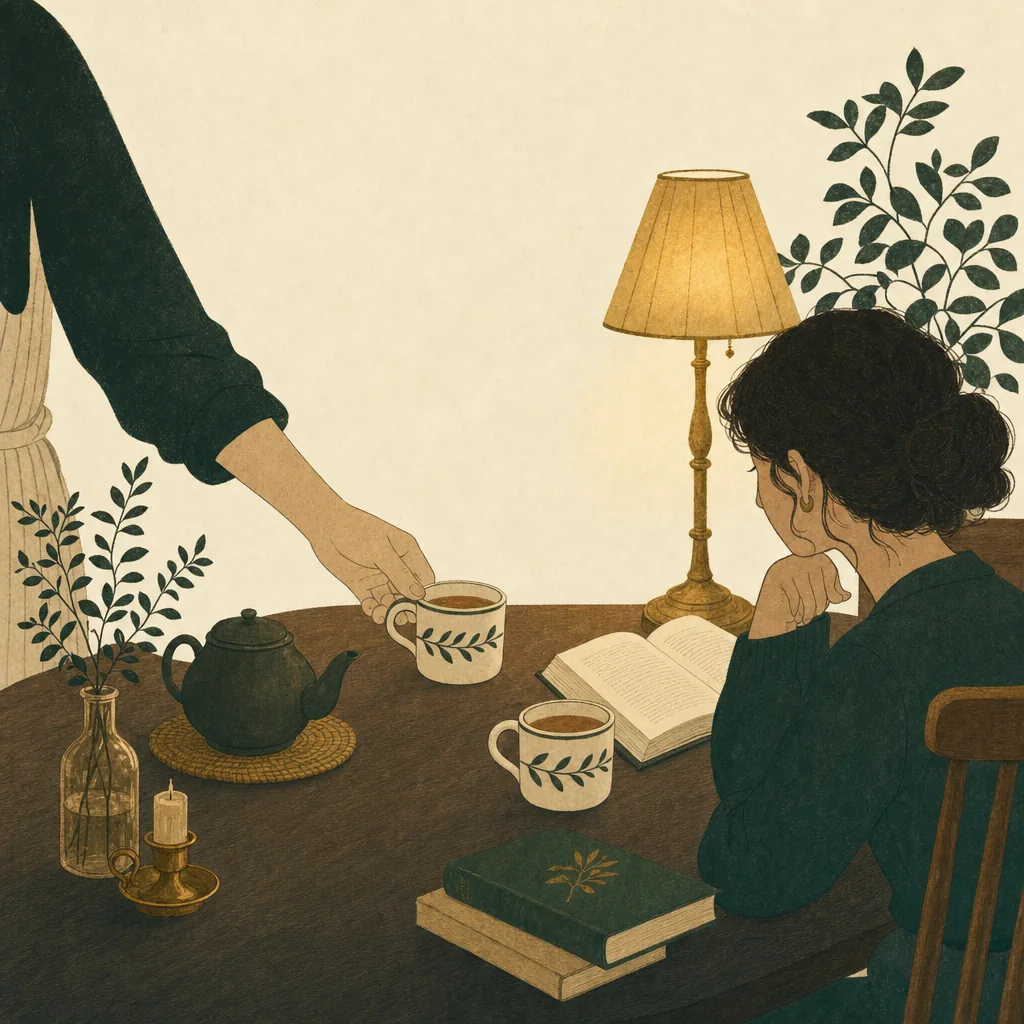
A partner looks up from their phone and says huh, they're tearing down the old diner. It is not a conversation. It barely qualifies as a sentence. It is, though, an invitation — a small, low-stakes offer of be here with me for a second.
These invitations happen constantly. Dozens a day, most of them invisible, none of them memorable. And what happens to them turns out to matter far more than anything that happens during the big talks.
Three things you can do with an invitation
Turn toward it. Look up. Say really, that place was awful. It takes two seconds and it costs nothing.
Turn away from it. Not out of malice — you are mid-email, mid-thought, mid-anything. The invitation simply lands on the floor.
Turn against it. Can you not, I'm working. Rarer, and it stings more.
Nobody turns toward every time. Nobody should. But the ratio compounds, quietly, for years, and it does most of the work of deciding whether two people still feel like a team.
Why it decides fights you haven't had yet
Here is the part couples find surprising. The couples who repair well during conflict are usually the ones with a long history of turning toward outside of it. All those two-second moments accumulate into something worth protecting — so when one of them offers a clumsy peace gesture at 11pm, the other has a reason to take it.
Put another way: goodwill is not a mood. It is a balance, and it is funded in very small deposits.
Where to start
Not with a resolution to communicate better. Start by noticing. For two days, just count the invitations you receive and the ones you miss. Most people are startled by how many there were, and by how cheap the answer would have been.
Most of what holds two people together is not the big conversations. It is the hundred small invitations a week, and whether anyone answers them.
Take this one further, free
- The DoorwayWrite about your own recurring argument as a neutral third party who wants the best for both of you — the writing exercise from the two-year trial, in worksheet form.Worksheet · about 21 minutes · nothing you type leaves your browser
- The Sunday LookA standing twenty minutes on the money, at the same time each week, so it stops arriving as an ambush on a Wednesday night.Planner · about 20 minutes · nothing you type leaves your browser
- The time-together check-inTwelve questions about the time the two of you actually get — how much of it there is, whether you are both in it, and whether it has any shape other than the usual one.12 questions · about 3 minutes · no signup
When you’re ready
Reading about a pattern is one thing. Hearing it named as it happens is another.
Your first session is free: about fifteen minutes, on your own, no card.
Keep reading
- Inside the argument7 min read
What Money Fights Are Actually Like
One hundred couples logged every argument at home for a fortnight. Money came fifth. It was also the one that ran longest, mattered most and settled least.
Read it → - Becoming parents9 min read
What a First Baby Does to a Relationship
Couples were followed from before their weddings through eight years of marriage. The drop after a first birth was real and it did not undo itself. The couples without children were sliding too.
Read it →