Conflict patterns
Draft3 min readThe Four Patterns That Predict a Fight Going Nowhere
Four moves show up again and again in conversations that end badly. Learning to spot them mid-sentence is most of the work.
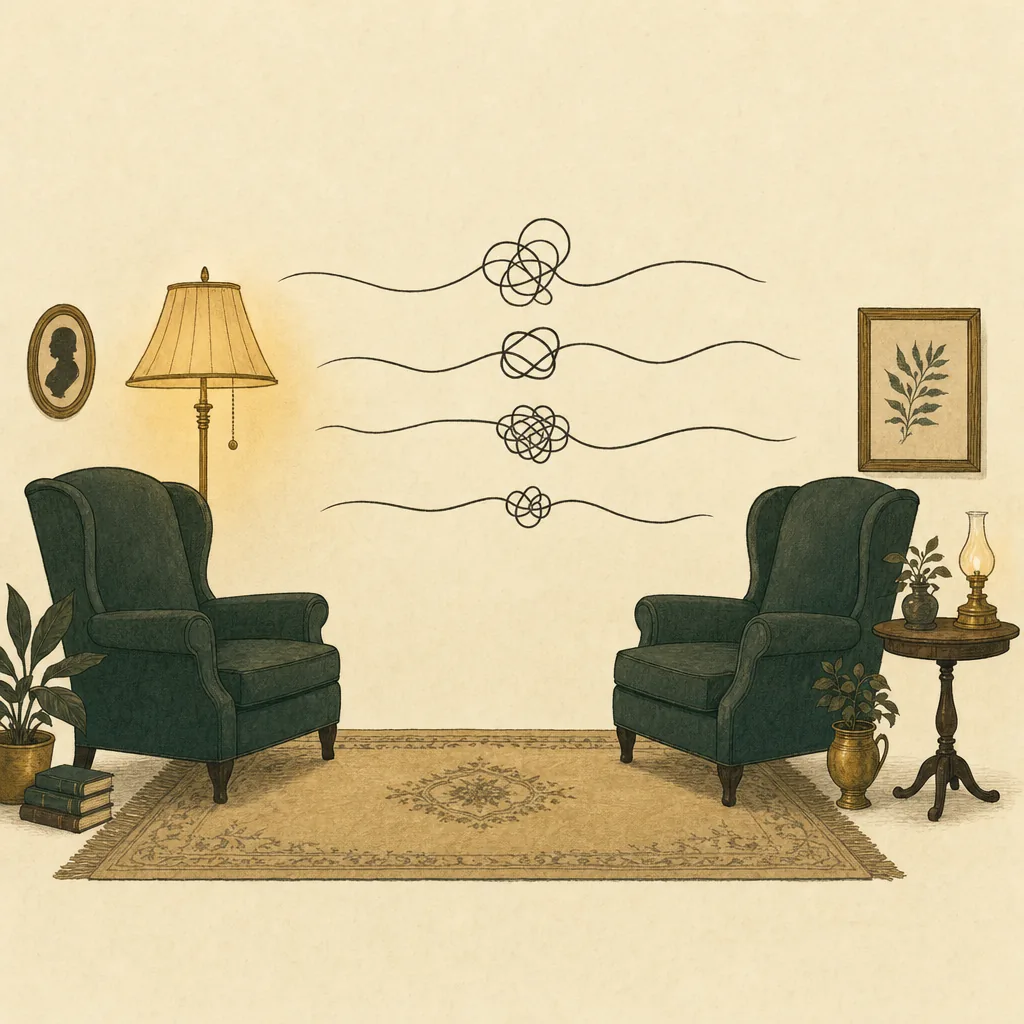
Draft. A placeholder written to shape the hub. It has not been through the review pass and does not ship in this state.
Almost nobody argues about the thing they are arguing about. Couples who have been together a while are rarely fighting over the dishwasher; they are fighting over what the dishwasher has come to mean. That is why the content of an argument is a poor predictor of how it will end — and why the shape of it is an excellent one.
Four moves reliably turn a solvable disagreement into a night nobody recovers from. In our method we call them the four patterns, and we teach couples to name them out loud, in the moment, without apology.
The verdict
A complaint says you left the dishes again and I'm tired. A verdict says you never think about anyone but yourself. One is about an evening; the other is about a character. Verdicts are almost always accurate about the feeling and almost always wrong about the person, and they are impossible to answer without a defence.
Contempt
The eye-roll. The tone that says the other person is beneath the conversation. Of the four, this is the one that does structural damage, because it is not a bid for change — it is a verdict already delivered. Couples can absorb a great deal of anger. Very few absorb being looked down on.
The counter
Defending is human. The problem is that a defence, offered in the middle of a complaint, reads as your feeling is incorrect. The counter usually arrives with evidence attached, which makes it worse: now there are two cases being argued and nobody is being heard.
The shutdown
One person goes quiet, flat, unreachable. It looks like indifference and it almost never is — it is usually a nervous system that has hit its limit. The answer is not to pursue harder. It is a named break, with a time to return.
None of these mean a relationship is failing. All four show up in good relationships, regularly. What separates couples who come out the other side is that they can catch the pattern while it is happening, name it without scoring a point, and choose the other move.
Four moves show up again and again in conversations that end badly. Learning to spot them mid-sentence is most of the work.
When you’re ready
Reading about a pattern is one thing. Hearing it named as it happens is another.
Your first session is free: about fifteen minutes, on your own, no card.
Keep reading
- Inside the argument7 min read
What Money Fights Are Actually Like
One hundred couples logged every argument at home for a fortnight. Money came fifth. It was also the one that ran longest, mattered most and settled least.
Read it → - Stress from outside7 min read
How a Hard Day Gets Into the Evening
165 newlyweds kept a diary for a fortnight. On the days that were harder than their own average they were sharper with each other, and the cause was not the relationship.
Read it →